

The Lucalvry view
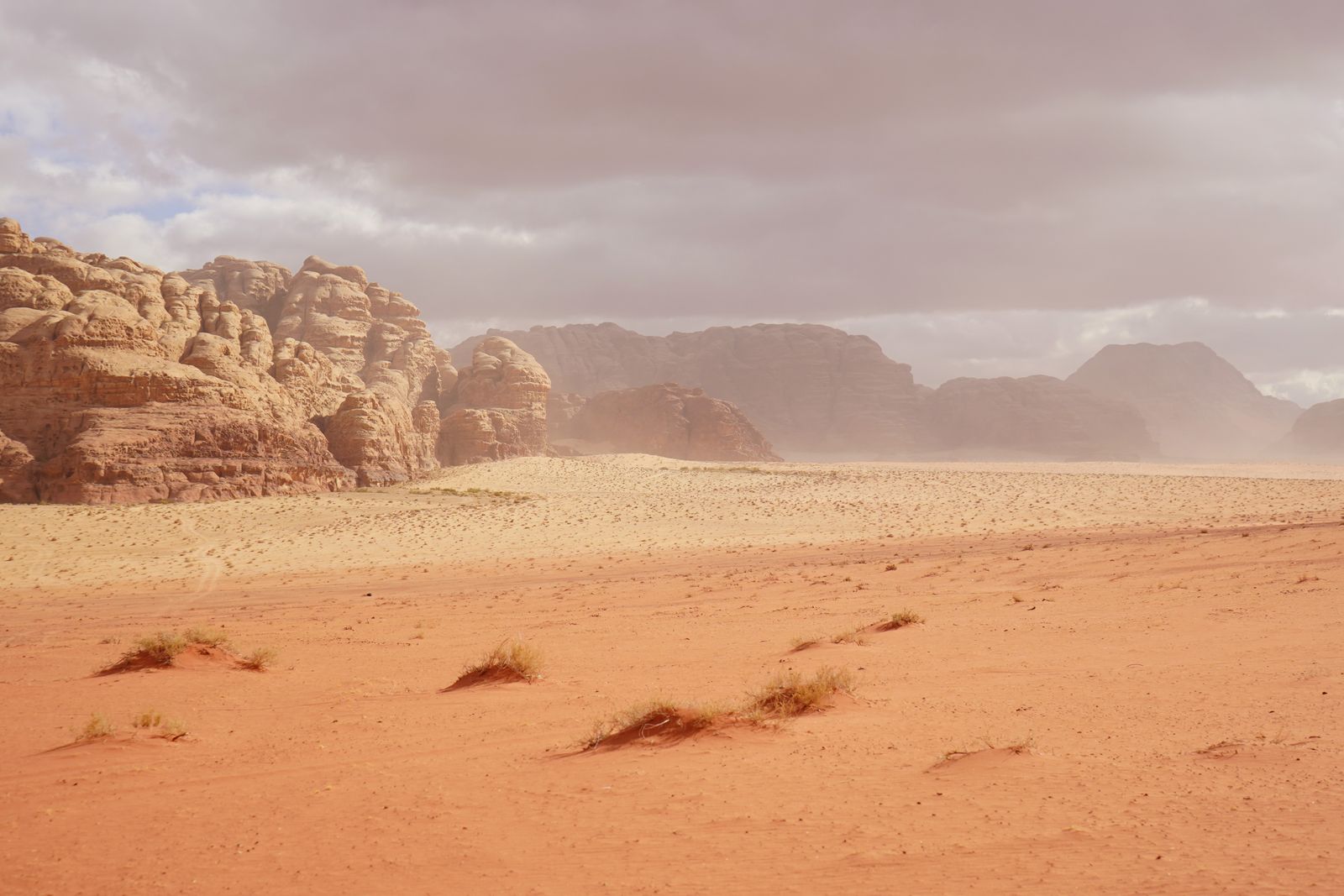
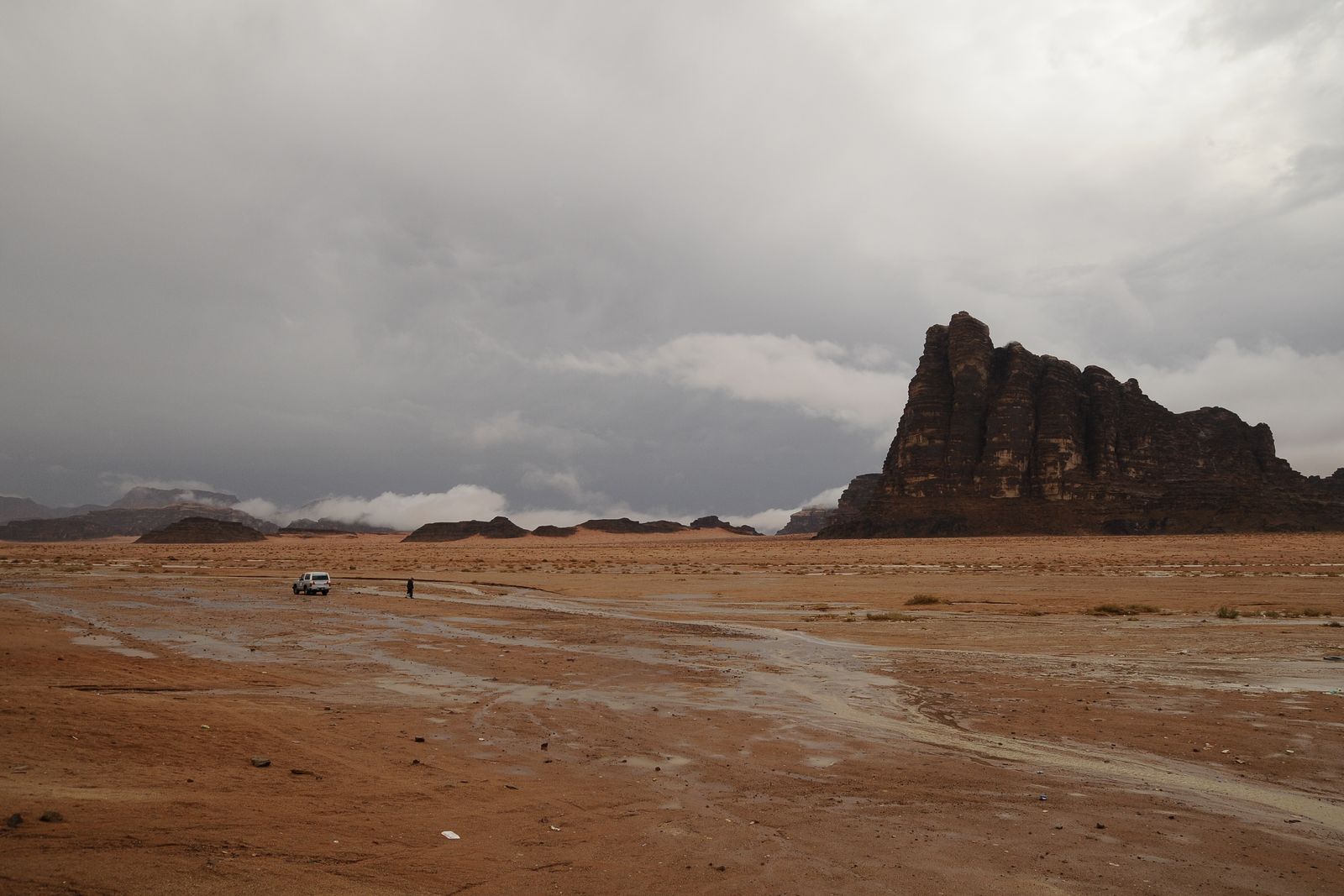
Wadi Rum is the Jordanian desert headline and the most cinematic landscape in the Middle East — 720 square kilometres of Mars-red sandstone monoliths, weathered granite ridges, and pale-pink sand seas, used as the filming location for Lawrence of Arabia, The Martian, Dune, and Star Wars: The Rise of Skywalker. T.E. Lawrence wrote that the place was “vast, echoing, and god-like,” and the description still holds. The Bedouin Zalabia tribe runs the entire visitor experience under a protected-area arrangement; you cannot enter Wadi Rum without a Bedouin guide and you cannot stay outside one of the established camps.
The right approach is one or two nights at a desert camp — Memories Aicha and Hasan's Camp are the upmarket bubble-tent options, the Sun City Camp is the headline transparent-dome experience, and Bait Ali sits at the entry-village edge for travellers wanting a less-isolated stay. The signature experience is the half-day 4WD desert tour with a Bedouin driver — the Khazali canyon, the natural rock arches at Burdah, the Lawrence Spring, and the sand-dune climb — followed by a Bedouin zarb dinner under stars and a sleep in a transparent dome with the Milky Way overhead. Two nights is enough; three feels indulgent unless you're rock-climbing.
Neighborhoods
Where to base yourself
Bubble Tent Camps (Memories Aicha, Sun City)
Stay hereThe signature stay — transparent-roof domes for stargazing, in the protected area's interior, 4WD-access only.
Traditional Bedouin Camps (Hasan's, Wadi Rum Night Luxury)
The classic black-goat-hair tent setup with private en-suite cabins, more atmospheric and less rate-pressured than the bubble tents.
Rum Village (entrance)
The Bedouin settlement at the protected-area gate — the visitor centre, the 4WD pickup point, basic guesthouses for budget travellers.
Disi (north of Rum)
The neighbouring valley with separate camp clusters — quieter, used by climbers and travellers wanting a less-trafficked alternative.
Hotels
Where to stay
- $$$
Memories Aicha Luxury Camp
Twenty bubble-tent rooms with transparent ceilings for stargazing — the most-cited Wadi Rum stay and the right introduction to the desert.
- $$$
Sun City Camp
Forty Martian-style geodesic domes with transparent-panel walls — the most photographed Wadi Rum experience, with the strongest meal programme.
- $$
Hasan's Camp
Eight bubble tents and twelve canvas tents in a quieter pocket — Bedouin-run, smaller, the editor's pick for the better star-tour briefing.
- $$
Wadi Rum Night Luxury Camp
Twelve traditional Bedouin tents with en-suite bathrooms and a central majlis dining tent — the atmospheric classic-style alternative.
Dining
Where to eat
Camp dining (full board)
Every Wadi Rum camp is full-board — Bedouin breakfast, packed lunches for the desert tour, zarb dinner cooked in an underground sand pit.
The zarb dinner
The signature Bedouin meal — chicken and lamb buried in coals under the sand for three hours, served with rice and yoghurt. Universal across all camps and properly extraordinary.
Bedouin breakfast
Flatbread baked on a tin sheet over coals, labneh, olives, halloumi, eggs, mint tea poured from a great height — the standard camp breakfast.
Bedouin tea ritual
Sage tea served constantly throughout the desert tour at every stop — the social currency of Wadi Rum, never refuse it.
An ideal day
What to do
- Late afternoon (arrival)
4WD pickup from Rum Village, transfer into the protected area to the camp, sundowner at the dunes above the camp.
- Evening
Zarb dinner around the fire, Bedouin music, then the camp's astronomer-led star tour with the telescope (genuinely Class-1 dark-sky territory).
- Pre-dawn (Day 2)
Optional camel ride at first light into the dunes — Bedouin tradition, photographers' favourite, two hours.
- Morning
Half-day 4WD tour — Khazali canyon (Nabataean petroglyphs), Lawrence's Spring, the Burdah rock arch climb, the great red dune for the sand-board run.
- Afternoon
Hot-air balloon flight ($150 per person, dawn-only departures from Disi) or a guided rock climb to Jebel Burdah (one of the world's most distinctive arches).
Logistics
Getting around
From Petra, Wadi Rum is two hours by road on the Desert Highway south — every Petra hotel arranges private transfer (JOD 80 one-way). From Aqaba (AQJ), Wadi Rum is one hour and the route is the most efficient if you're flying domestically into southern Jordan. From Amman direct, allow four hours. At the protected area entrance (Rum Village), your camp arranges the 4WD transfer into the desert (included in the rate); private cars are not permitted beyond the village gate. Within the desert, you do not drive yourself — every excursion is with a Bedouin guide in a 4WD pickup. Pack a fleece for the desert nights (winter temperatures drop below 5°C even when the days are warm), a sun hat, sturdy walking shoes for the canyon scrambles, and a torch for the camp paths.
Cost snapshot
What things cost in Wadi Rum
- Espresso
- $3.50
- Dinner for two
- $50
- Taxi (5 km)
- $12
- 4★ hotel/night
- $260
Numbeo medians, mid-week shoulder season. Verified 2026-05-13.
Best time to visit
Twelve months in Wadi Rum
| Month | Avg high | Rain days | Crowds | Prices |
|---|---|---|---|---|
| Jan | 16°C | 3 | ●●●●● | ●●●●● |
| Feb | 18°C | 3 | ●●●●● | ●●●●● |
| Mar | 22°C | 3 | ●●●●● | ●●●●● |
| Apr | 27°C | 1 | ●●●●● | ●●●●● |
| May | 32°C | 1 | ●●●●● | ●●●●● |
| Jun | 35°C | 0 | ●●●●● | ●●●●● |
| Jul | 36°C | 0 | ●●●●● | ●●●●● |
| Aug | 36°C | 0 | ●●●●● | ●●●●● |
| Sep | 33°C | 0 | ●●●●● | ●●●●● |
| Oct | 29°C | 1 | ●●●●● | ●●●●● |
| Nov | 23°C | 2 | ●●●●● | ●●●●● |
| Dec | 18°C | 2 | ●●●●● | ●●●●● |
FAQ
Common questions about Wadi Rum
- How long should I stay in Wadi Rum?
- One or two nights is the working window. One night gives you a half-day desert tour and one zarb dinner. Two nights lets you do a full-day deep-desert tour, an early camel ride, a hot-air balloon flight, or a rock climb. Three nights only if you're a serious climber or photographer.
- Bubble tent or traditional camp?
- Bubble tents (Memories Aicha, Sun City) for the stargazing experience and the better photo opportunity — the transparent ceilings genuinely deliver. Traditional Bedouin camps (Hasan's, Wadi Rum Night Luxury) for the more atmospheric setting and lower rates. The bubble tents can run hot in summer (no air conditioning) and cold in winter; check the season.
- When to visit Wadi Rum?
- March through May and September through November are the working windows — daytime temperatures in the 20s, cool desert nights that need a fleece, and the desert light at its most dramatic. June through August is dangerously hot (45°C+ daytime) and inadvisable for the canyon scrambles. December through February is cold (5°C nights, occasional frost) but the days are clear and the bubble tents are heated.
- Do I need a guide?
- Yes — entry to the Wadi Rum Protected Area requires a Bedouin guide and pre-booked accommodation. Self-driving is not permitted beyond Rum Village. Every camp arranges the 4WD transfer and the desert tour as part of the stay.
- Is Wadi Rum safe?
- Exceptionally — the Bedouin guide programme is highly regulated, the camps are well-organised, and the tribe takes safety seriously. The genuine risks are dehydration in summer, falls during rock scrambles (wear proper shoes), and getting separated from your guide (don't wander). The desert itself is well-mapped and monitored.
From the edit
Guides & stays in Wadi Rum
 Hotels
Best Luxury Desert Camps in Wadi Rum 2026: Five Bedouin-Heritage Stays Tested
Five Wadi Rum camps we paid to test in 2026 — the bubble-tent design flagships, the bedouin-owned heritage camps, and the smartest sub-JOD 280 sleepers in Jordan's protected desert area.
May 14, 2026 · 10 min read
 Destinations
Where to Stay in Wadi Rum (2026): Bubble Camp vs Bedouin Camp
The decision-shaped Wadi Rum camp guide — the bubble-tent star-view category against the traditional Bedouin-camp category, with rates, gate-transfer minutes, and one named camp per band.
May 16, 2026 · 12 min read
 Destinations
Wadi Rum Guide (2026): Overnight Camp vs Day-Trip From Petra
The decision-shaped Wadi Rum routing — what fits in a half-day jeep tour from Petra, what unlocks at the overnight commitment, and the case for the two-night deep-desert programme.
May 16, 2026 · 12 min read
Also in Jordan
 Hotels
The 5 Best Luxury Hotels in Petra for 2026
The definitive 2026 guide to Petra's luxury hotels. From the Mövenpick's legendary proximity to the Old Village's stone-hewn charm, we rank the best.
May 14, 2026 · 12 min read
HotelsBest Luxury Hotels in Jordan 2026
Seven exceptional Jordan hotels tested across Petra, Wadi Rum, the Dead Sea, and Amman—from desert camps to wellness sanctuaries for 2026 stays.
May 14, 2026 · 8 min
HotelsBest Luxury Hotels in Amman 2026: Five Hilltop Stays Tested
Five Amman hotels we paid to test in 2026 — the Jabal Amman flagships, the embassy-quarter international properties, and the smartest sub-JOD 220 sleepers in Jordan's transit-night capital.
May 14, 2026 · 9 min read
Sources
- Numbeo cost-of-living — Wadi Rum — verified 2026-05-13
- climate-data.org — Wadi Rum — verified 2026-05-13
Last updated 2026-05-14 by The Lucalvry Edit.